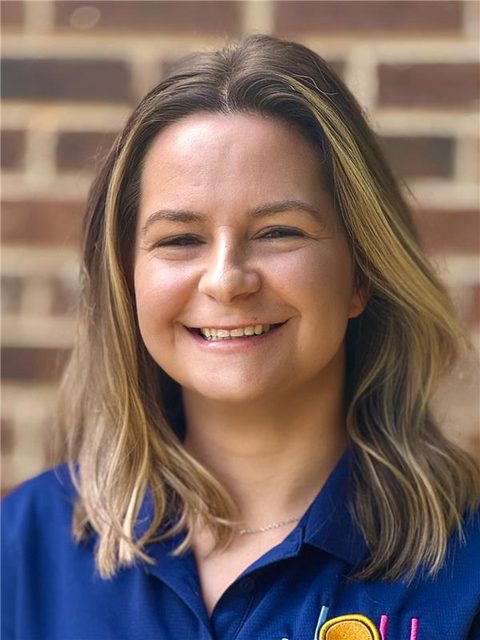
Lora Carrion
PT, DPT
Physical Therapy View profileThese settings are remembered on this device.
Keyboard navigation works throughout without being switched on: Tab moves between controls, Enter activates them, Escape closes menus. If anything here is hard to use, please tell us so we can fix it.

The TheraSuit Method: two hours a day, five days a week, for two weeks.
Intensive pediatric physical therapy using the TheraSuit Method and a Universal Exercise Unit, two hours a day for two weeks. For children with cerebral palsy and other neurological conditions who progress faster with daily practice. Families travel to Cumming for it.
Intensive therapy is pediatric physical therapy delivered in a concentrated block instead of a weekly appointment. At Joy Therapy and Learning Center it follows the TheraSuit Method and runs for two consecutive weeks, two hours a day, five days a week. Ten sessions, twenty hours, in the time a child on a standard schedule would get two.
The reason is repetition. A child learning to sit, stand, transfer or walk is building new connections in the nervous system, and those connections are built by practicing the movement over and over, correctly, with enough support to succeed and enough challenge to matter. In a weekly session a physical therapist gets a handful of repetitions before the hour is up and a week passes. In an intensive, the same therapist practices the same movement patterns with your child every day, and each day starts where yesterday ended.
Two pieces of equipment make that possible. The first is the TheraSuit, a soft orthotic suit that holds the body in better alignment while your child moves, which is why families often call the whole approach suit therapy. The second is a Universal Exercise Unit, which most families know as the spider cage, a frame of pulleys and elastic cords that lets a therapist support, resist or isolate a movement precisely. Both are described below.
This is a program within our pediatric physical therapy service, led by Lora Carrion, PT, DPT, who is certified in the TheraSuit Method. It is not a replacement for a child’s regular therapy or a first step. Most children who come for an intensive already have a diagnosis and a therapy history, and the intensive is chosen because a specific goal needs more concentrated work than a weekly schedule can give it.
The TheraSuit Method was developed in 2002 by Izabela and Richard Koscielny, two physical therapists whose own daughter has cerebral palsy, and it has since been adopted by children’s hospitals and pediatric clinics across the United States. The suit at the center of it is a soft, dynamic orthosis: a vest, shorts, knee pads and shoe attachments connected by adjustable elastic cords. The cords are set by the therapist to pull the body toward correct alignment, so the trunk stays upright, the pelvis sits level and the joints load the way they should. A child who normally has to spend most of their effort staying upright can put that effort into the movement instead.
The suit does several things at once. It provides external stabilization for a trunk or hip that cannot yet hold itself, it applies gentle pressure and resistance that helps normalize muscle tone, it gives constant tactile feedback about where the body is in space, and it loads the joints vertically through the hips, which supports bone density and alignment in children who do not stand or walk much on their own. Because the resistance is adjustable, the same suit that supports a weak muscle can also be set to make a strong one work harder.
Head and trunk control are where the effects show up first. A child who is better supported through the middle of the body has an easier time controlling the head, and with it breathing and voice. Families sometimes notice a change in speech during an intensive that has nothing to do with speech therapy and everything to do with a stable trunk.
The Universal Exercise Unit, usually shortened to the spider cage, is a steel frame with pulleys and elastic cords. It has two jobs. In one setup, a child works against weights through the pulleys to strengthen a single muscle group in isolation, which is difficult to do any other way with a child who cannot follow an adult exercise program. In the other, elastic cords attach to a belt at the child’s hips and clip to the frame on all sides, which is where the spider cage name comes from. Suspended like that, a child can stand, balance, step and even fall safely, with the cords absorbing the weight their legs cannot yet hold.
For a child who has never stood independently, the cage is often the first place they experience upright balance without an adult’s hands on them. For a child who walks but falls, it is where they practice recovering their balance hundreds of times without getting hurt. The therapist adjusts the cords session by session as strength and control improve, so the support disappears at the pace the child no longer needs it.
Intensive therapy is designed for children with neurological involvement, meaning the difficulty with movement comes from the brain or nervous system rather than from a single injury. Families usually come to us because their child:
Diagnoses we work with in the intensive program include:
This list is not exhaustive and nothing on it is a diagnosis. If something here sounds like your child, an evaluation is the way to find out what is actually going on.
Every intensive is planned around the goals set at your child’s evaluation, so no two look identical. A typical two-hour day has a shape, though, and it helps to know it before you arrive.
The session opens with stretching and hands-on work to prepare tight muscles and get your child’s body ready to move. Tone, sleep and mood all change from day to day, and the therapist reads them before deciding how hard to push.
Using the pulleys, your child works specific muscle groups in isolation, with the therapist choosing the weights and the number of repetitions. This is the part of the day that builds the raw strength the functional work depends on.
With the suit on and set for the day, your child practices the actual skills: sitting, transitions, standing, stepping, balance and walking, depending on the goals. Repetition is the point, and the therapist finds ways to keep a child engaged through a lot of it.
The day ends with the therapist showing you what changed, what to expect tomorrow and what to do at home that evening. By the end of the two weeks you will have a home program built from what worked.
The intensive program is led by Lora Carrion, PT, DPT, who holds:
This page is not a diagnosis and nothing on it is medical advice. If something here sounds like your child, an evaluation is how you find out what is actually going on.
Your care team
PT, DPT
Physical Therapy View profilePT, DPT
Physical Therapy View profile
PT, DPT
Physical Therapy View profile
PT, DPT
Physical Therapy View profileCommon questions
The insurance plans we accept typically cover a two-week intensive. Coverage is never something we can promise before we check, so our intake team verifies your child's benefits before anything is scheduled and tells you exactly what your plan requires, including whether a physician referral is needed. If your therapist believes more than two weeks is warranted, additional time can be arranged on a self-pay basis.
No. Children come to the intensive program from our own physical therapy caseload and from outside the practice, including from outside Georgia. Every child starts with an evaluation so the therapist can set goals for the block, and if your child already has a recent evaluation or a treating therapist elsewhere, bring those records and we will build on them.
Yes, and anyone who is interested is welcome. Our center is in Cumming, Georgia, north of Atlanta on GA 400, and TheraSuit intensive programs are uncommon enough that families travel for them from across metro Atlanta, north Georgia and out of state. If you are coming from a distance, tell our intake team when you call so the two weeks can be booked as a single block and you can plan the trip around firm dates.
They are close relatives. All of them are soft dynamic suits descended from the same idea, a garment with elastic cords that loads and aligns the body, and parents use suit therapy as the umbrella term for the whole family. The TheraSuit Method is the specific program Lora Carrion is trained and certified in, and it pairs the suit with the Universal Exercise Unit and a structured daily protocol. If you have read about one of the others, the questions to ask us are the same: who is certified, what a day looks like and what the goals will be.
Some intensive programs run three or four hours a day for three weeks. Ours is two hours a day for two weeks, which is the block the insurance plans we accept typically cover, so most families can do it without paying out of pocket. If your child's therapist believes more time is warranted, additional weeks can be arranged on a self-pay basis, and many families return for a second block later rather than doing one long one.
It is demanding, and the fit is decided at the evaluation rather than assumed. The two hours include preparation, rest between activities and a cool-down, not two hours of continuous exertion. Most children are tired in the afternoons during an intensive, which is expected. Plan for quiet afternoons and early nights during the block.
No. The equipment exists precisely for children who cannot yet bear their own weight. The Universal Exercise Unit supports a child in standing before their legs can, and the TheraSuit provides the trunk and hip stability a child needs to work on sitting and standing at all. Goals are set from where your child is now.
You leave with a home program built from what worked during the block, and your therapist will talk with you about what should follow, whether that is a return to weekly physical therapy here or with your own therapist, a break, or another intensive later. Progress made in an intensive holds best when it is practiced afterward, which is why the home program matters.
Lora Carrion, PT, DPT, is our TheraSuit Method certified physical therapist and leads every intensive. Call 770-240-0163 and ask for the TheraSuit intensive therapy program, and our intake team will connect you.
Our licensed speech-language pathologists assess, develop and enhance a child's ability to communicate, from first words through complex conversation.
Learn about speech and language therapyOur licensed occupational therapists help children with physical, sensory or cognitive differences take part in daily life as independently as possible.
Learn about occupational therapyOur licensed physical therapists help each child reach their maximum potential for independent movement and take an active part in home, school and community life.
Learn about physical therapyOur specially trained therapists work with children to enhance their ability to eat safely, comfortably and effectively.
Learn about oral motor and feeding therapyOur intake team can answer your questions, check your insurance benefits and help you work out which service fits.