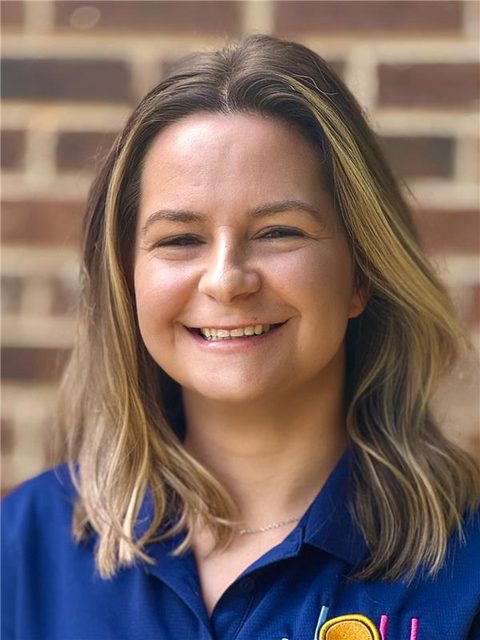
Lora Carrion
PT, DPT
Physical Therapy View profileThese settings are remembered on this device.
Keyboard navigation works throughout without being switched on: Tab moves between controls, Enter activates them, Escape closes menus. If anything here is hard to use, please tell us so we can fix it.
Strength, movement and the confidence that follows.
Our licensed physical therapists help each child reach their maximum potential for independent movement and take an active part in home, school and community life.

Pediatric physical therapy addresses how a child moves: rolling, sitting, crawling, walking, running, climbing, and everything built on top of those foundations. It also addresses the strength, balance, endurance and coordination that make movement possible and sustainable.
Referral forms and school paperwork usually shorten it to pediatric PT, and it is the same service. Where a child’s difficulty is more about hands, sensory processing and daily routines than about movement itself, occupational therapy is often the better fit, and for children under three the way in is frequently early intervention rather than a clinic appointment.
Worth being clear about where therapy happens, because families ask. Physical therapy here is delivered at our center in Cumming. We do not offer therapy in the home outside of Babies Can’t Wait, Georgia’s publicly funded early intervention program for children under three, which is home based by design. If you have found us searching for a therapist who visits, that is the route worth asking about.
Pediatric physical therapy is genuinely different from adult physical therapy, and not only because the patients are smaller. An adult recovering from a knee replacement is rebuilding a skill they already had. A child with a gross motor delay is often building it for the first time, while their body is still growing and changing. Treatment has to account for development rather than simply restoring a previous state.
It also has to be fun, because a two-year-old will not complete a set of exercises because it is good for them. Our physical therapists are skilled at hiding demanding, repetitive work inside games a child wants to keep playing. A child navigating an obstacle course is doing balance, strength, motor planning and endurance work at once and would describe the session as playing.
One thing we are asked about constantly is W sitting, where a child sits with their bottom between their feet and their lower legs turned out to the sides. The evidence does not support most of the warnings attached to it, and we would rather tell you that than sell a course of therapy for an ordinary sitting position. What is worth a look is a child who cannot manage any other position, or who is choosing it because staying upright is hard work.
Some children, most often those with cerebral palsy or another neurological condition, reach a point where a specific goal such as independent sitting, standing or walking needs more concentrated practice than a weekly appointment can give it. For them we offer a two-week TheraSuit intensive therapy program using the TheraSuit and a Universal Exercise Unit, two hours a day, five days a week, led by Lora Carrion, our TheraSuit-certified physical therapist. It has its own page because it is a different commitment, and families travel to Cumming for it.
A large share of our physical therapy referrals are babies, most commonly for torticollis, a tightening on one side of the neck that keeps an infant turning their head consistently to one side. It often appears alongside plagiocephaly, a flattening of one part of the skull. Both respond well to early treatment and both become harder to address the longer they persist.
If you have noticed your baby consistently turning their head one way, resisting turning the other way, or developing a flat spot, mention it at your next pediatric visit and ask specifically about a physical therapy referral. Parents often notice this before anyone else does, and being told it will probably even out is not always the end of the conversation.
Common reasons a child is referred to pediatric physical therapy:
We work with children across a wide range of needs, including:
This list is not exhaustive and nothing on it is a diagnosis. If something here sounds like your child, an evaluation is the way to find out what is actually going on.
Physical therapy sessions are active, physical and paced to your child’s endurance. Sessions typically run 30 to 60 minutes.
Your therapist checks how your child is moving that day, since tone, fatigue and mood all affect what is realistic in a given session.
The core of the session addresses the specific goal: strength, balance, gait, transitions or endurance, delivered through activities your child will engage with.
Orthotics, walkers, gait trainers and other equipment are used and adjusted as needed, in coordination with your child’s physician and equipment vendor.
You will leave with specific positions, activities or stretches to continue at home, along with a clear explanation of why each one matters.
Every physical therapist at Joy Therapy and Learning Center holds:
This page is not a diagnosis and nothing on it is medical advice. If something here sounds like your child, an evaluation is how you find out what is actually going on.
Your care team
PT, DPT
Physical Therapy View profilePT, DPT
Physical Therapy View profile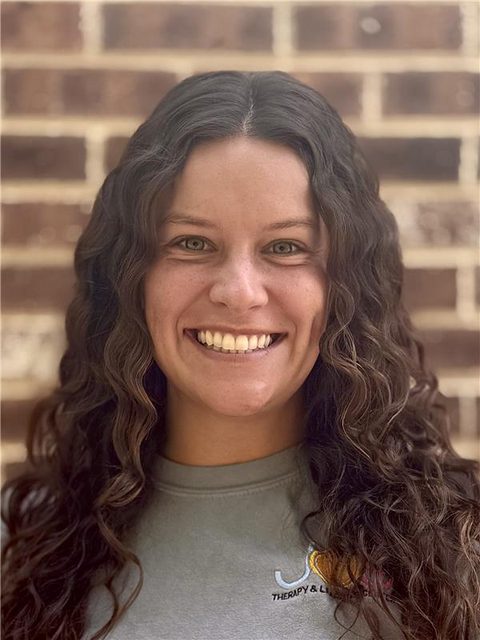
PT, DPT
Physical Therapy View profile
PT, DPT
Physical Therapy View profileCommon questions
Not necessarily. Plagiocephaly frequently occurs alongside torticollis, a muscular tightness that limits how far a baby turns their head. That underlying restriction can affect how a baby develops movement on both sides of their body, so it is worth having assessed rather than watching it. Early treatment is straightforward and typically short.
Toe walking is common in early toddlers and many children stop on their own. It is worth evaluating if it persists past age two or three, if your child cannot stand flat-footed when asked, if there is tightness at the ankle, or if it appears alongside other developmental concerns. An evaluation can distinguish habitual toe walking from a physical restriction.
Requirements depend on your insurance plan rather than on us, and some plans require a physician referral for coverage while others do not. Call 770-240-0163 and our administrative team will tell you exactly what your plan needs before you schedule.
Therapy should be demanding but not painful. Some stretching and strengthening is uncomfortable in the moment, and a child may protest simply because it is hard work. Your therapist will explain the difference and will always stop and reassess if your child is in genuine pain.
School-based physical therapy is provided to support access to education, so goals are tied to what a child needs in the school setting and eligibility is determined by the school system. Private therapy can address goals across the whole of a child's life. Many children appropriately receive both.
It varies with the diagnosis and the child. Some infants with torticollis improve markedly within weeks. Children with complex neuromotor conditions work over years, and progress is measured in function and comfort rather than in a finish line. Your therapist will set expectations honestly at the evaluation.
Our licensed speech-language pathologists assess, develop and enhance a child's ability to communicate, from first words through complex conversation.
Learn about speech and language therapyOur licensed occupational therapists help children with physical, sensory or cognitive differences take part in daily life as independently as possible.
Learn about occupational therapyIntensive pediatric physical therapy using the TheraSuit Method and a Universal Exercise Unit, two hours a day for two weeks. For children with cerebral palsy and other neurological conditions who progress faster with daily practice. Families travel to Cumming for it.
Learn about TheraSuit intensive therapy programOur specially trained therapists work with children to enhance their ability to eat safely, comfortably and effectively.
Learn about oral motor and feeding therapyOur intake team can answer your questions, check your insurance benefits and help you work out which service fits.