
Babies Can’t Wait: A Georgia Parent’s Guide to Early Intervention
Georgia's early intervention program is free to refer to, open to parent referrals, and ends the day your child turns three. Most families learn all three of those facts too late.
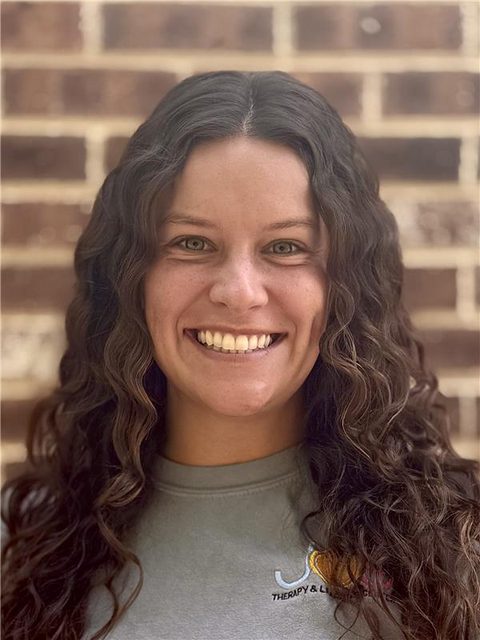 By Mackenzie Miller, PT, DPT
6 min read

If your child is under three and you have a concern about their development, Georgia has a program for exactly that situation. It is called Babies Can’t Wait, you can refer your own child without anyone’s permission, and it ends on your child’s third birthday.
Most families learn those three facts later than they would have liked. This is what the program is and how it works.
What Babies Can’t Wait is
Babies Can’t Wait is Georgia’s early intervention system for infants and toddlers from birth to age three. It is administered by the Georgia Department of Public Health and it operates under a federal law that requires every state to run a program like it.
It exists because of a straightforward piece of developmental science: the first three years are when the brain is most responsive to intervention, and support delivered during that window tends to produce more change per hour than the same support delivered later.
Services can include physical therapy, occupational therapy, speech-language therapy, special instruction, service coordination and several others, depending on what a child needs.
Who qualifies
Broadly, children qualify in one of two ways.
Developmental delay. A child shows a measurable delay in one or more areas of development: physical, cognitive, communication, social and emotional, or adaptive. Eligibility is determined by an evaluation rather than by a parent’s or a doctor’s impression.
A diagnosed condition. A child has a diagnosed physical or mental condition with a high probability of resulting in developmental delay. Down syndrome, cerebral palsy and certain genetic conditions typically qualify a child automatically, without waiting for a delay to appear.
You do not need to know in advance whether your child qualifies. That is what the evaluation is for, and the evaluation itself is not charged to families.
How to make a referral
This is the part worth knowing: you can refer your own child. You do not need a physician’s referral, a diagnosis or anyone’s approval.
Referrals also commonly come from pediatricians, hospitals, childcare providers and public health departments. But if your pediatrician has suggested waiting and your concern has not gone away, you are entitled to make the referral yourself.
To start, contact the Babies Can’t Wait program through the Georgia Department of Public Health, or call your local health district office. If you are in Forsyth, Cherokee, Dawson or North Fulton county and you are not sure who to contact, call us at 770-240-0163 and we will help you find the right office for where you live.
What happens next
Once a referral is made, the process follows a defined sequence with federally mandated timelines.
Service coordinator. You are assigned a service coordinator, who becomes your main point of contact and guides you through everything that follows.
Evaluation and assessment. Your child is evaluated to determine eligibility and to identify their strengths and needs across developmental areas.
Eligibility decision. You are told whether your child qualifies, and why.
The IFSP. If your child is eligible, you and the team write an Individualized Family Service Plan. This document drives everything: what outcomes you are working toward, which services your child receives, how often, and where.
Federal rules require that the evaluation and the initial IFSP meeting happen within 45 days of the referral. If that timeline slips, you are entitled to ask about it.
The IFSP is a family plan, not just a child plan
This is the part that surprises most parents, and it is worth understanding before your first meeting.
An IFSP addresses the family, not only the child. The outcomes written into it are supposed to reflect what your family wants to be able to do, expressed in your own words. Something like we want to be able to take Ellie to a restaurant without it falling apart is a legitimate IFSP outcome. So is we want mornings to stop being a fight.
You are a full member of the team writing that plan. You can disagree with a proposed outcome, ask for something to be added, or say that a recommended frequency does not fit your life. Parents often arrive at the meeting expecting to receive a plan rather than to write one, and they get less out of the process as a result.
Therapy happens in your home
Early intervention services are delivered in a child’s natural environment, which for most families means home, and sometimes childcare.
That is a deliberate design choice. A one-year-old learns from thousands of small interactions with their family across a week, not from an hour in a clinic. So the therapist’s job changes shape: rather than performing therapy on your child, they work with what is already in your home and coach you through using it.
Practically, this means a therapist turning your laundry basket, your couch and your hallway into the session. It means meals, bath time and getting dressed becoming the intervention. And it means you do not need to clean up before a visit. Our therapists work around siblings, pets and ordinary household noise, and seeing the real conditions is more useful than seeing a staged version.
What it costs
Some parts of the program are provided at no cost to families, including evaluation, eligibility determination, service coordination and the development of the IFSP.
Other services operate on a sliding scale based on family income, and insurance may be billed with your consent. Georgia’s program has a family cost participation policy that sets out how this works.
The important point is that inability to pay is not supposed to prevent a child from receiving services. If cost is a concern, raise it directly with your service coordinator rather than declining services.
The third birthday
Babies Can’t Wait ends when your child turns three. Not the following school year, not the end of the month. The birthday.
Before that point, your service coordinator will begin a transition process, usually starting around six months out. Most commonly this involves a referral to your local school system to determine whether your child is eligible for preschool special education services under a different part of the same federal law.
Here is what catches families off guard: eligibility rules are different, and a child who qualified for early intervention does not automatically qualify for school services. Some children move smoothly into a preschool program. Others are found ineligible and their services simply stop.
If that happens, private therapy is the usual path forward, and many families continue with us at that point. It is worth starting that conversation before the transition rather than after, so there is no gap in support during a stretch when consistency matters.
If you are on the fence
The common reasons families delay are all understandable, and none of them hold up especially well.
My pediatrician said to wait. Pediatricians see your child for a short visit a few times a year. You see them constantly. If your concern has persisted for months, an evaluation is a reasonable response and it carries no obligation.
I do not want to overreact. An evaluation is information, not a diagnosis. If your child is developing typically, you will be told that clearly.
I do not want a label. Early intervention eligibility is not a diagnosis and it does not follow your child into school records automatically.
We will see how the next few months go. This is the one with a real cost, because the program has a hard ceiling at three. Months spent waiting are not recoverable.
Babies Can’t Wait program rules, eligibility and contacts can change. Confirm current details with the Georgia Department of Public Health or your local health district before you rely on them.
This article is general information and is not a diagnosis or medical advice about your child. If something here sounds familiar, speak to your pediatrician or ask us for an evaluation.