
What Happens in an ABA Assessment
It is not a test your child can fail, and very little of it looks like testing. Here is what each part of the process is for, and what you should expect to be able to read at the end of it.
An ABA assessment is a structured way of finding out what a child can already do, what they are working toward, and what is getting in the way. It is not a test, there is no score your child can fail, and very little of it looks like assessment from the doorway. Most of it is conversation with you and watching your child do ordinary things.
What it produces is a written plan. The useful measure of whether an assessment was any good is whether you can read that plan, recognize your child in it, and say what the next few months are for. Our ABA therapy page covers how programs are built and supervised once that plan exists.
What the assessment is actually for
Three questions, in this order.
What can this child already do? Skills are built on skills, and starting above a child’s current level is the most common reason a program stalls. A good deal of the assessment is simply an inventory.
What is worth working on next? Not everything a child cannot yet do is worth targeting. The things that unlock other things, and the things that matter to the family, come first.
Why is a particular behavior happening? Where a specific behavior is a concern, the assessment tries to work out what it achieves for the child rather than cataloguing how often it occurs.
That third question is the one most often skipped by people in a hurry, and it is the one that determines whether anything actually changes.
What is an ABA assessment made of?
Assessment in this field is usually described as having indirect, descriptive and experimental components, and a full picture normally uses more than one.
Indirect assessment. Structured interviews and rating scales, done with you and with anyone else who knows your child well. As the research literature describes it, this is where a clinician gathers information on the behavior, when it happens, what comes before it and what follows it. You are the primary source here, and detail helps far more than summary.
Descriptive assessment. Direct observation in your child’s own environment, without anyone changing anything, recording what happens before and after. This is where reported patterns either confirm themselves or turn out to be something else.
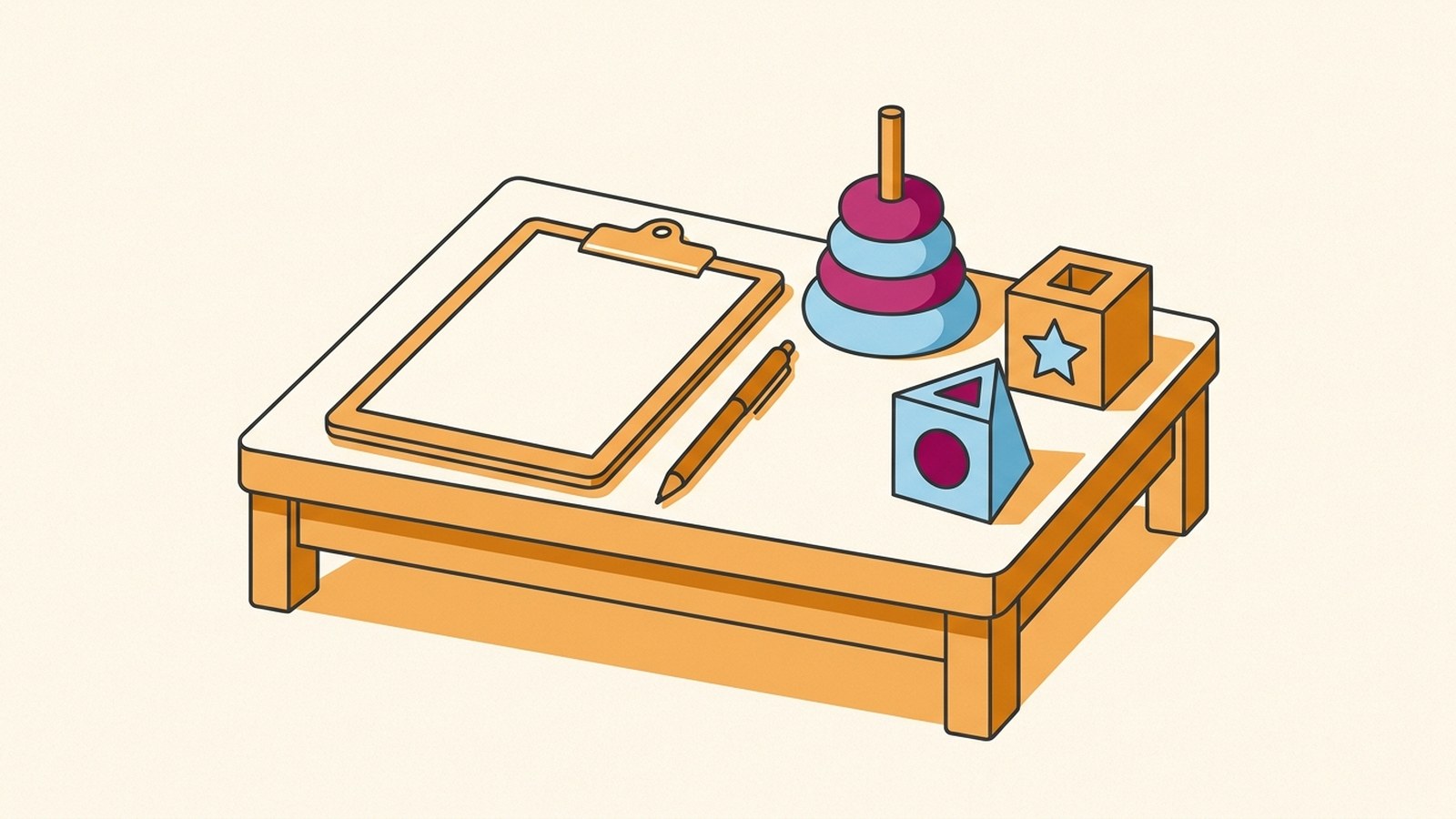
Skills assessment. Working through a structured inventory of what your child can do across communication, play, self care, social skills and early learning. This part usually looks like play with a clipboard nearby.
Experimental analysis. Where a behavior is serious and its purpose remains unclear after the first three, a clinician may carefully arrange situations to test a hypothesis. It is used deliberately rather than routinely, and you should be told in advance if it is planned and why.
What the skills part actually looks like
Less formal than most parents expect.
A clinician sits on the floor with your child and a box of things, and works out what is already there. Does your child request things, and how? Do they respond to their name, follow a simple instruction, imitate an action, wait, take a turn, tolerate an activity ending? Can they manage a spoon, a zip, a familiar routine?
Almost all of this is presented as play, and the items are pitched so that your child succeeds more often than not. A child who spends an hour failing is not a child anyone learns much from.
You may be asked to step out for part of it, or to stay and do some of it yourself, depending on what is being looked at. Either request is normal.
What the report should contain
You should expect a written report, and you should expect to understand it.
A good one describes what your child can currently do in plain terms, states what is being recommended and why, sets out proposed goals in language a parent can picture, and is explicit about what it does not know. It should reference the information it is based on, not just assert conclusions.
If you get a document you cannot follow, ask for it to be explained and ask for it in writing. Reports get read by schools, by other clinicians and by you at two in the morning, and jargon that only makes sense to the author is a failure of the report rather than a failure of the reader.
How goals come out of it
Goals should be recognizable versions of things you actually want.
A useful goal names an observable behavior, the situation it should happen in, and what would count as reaching it. Asking for a drink using words or a device, at home, most times they want one, is a goal. Improving communication is not.
They should also be sequenced. Some skills genuinely have to come before others, and a plan that reads as a flat list of twenty targets usually means nobody has thought about order.
Your priorities belong in the list. If the thing that would change your week is being able to get out of the house in the morning, say so at the assessment rather than after the plan is written.
What should I tell my child beforehand?
Yes, in an age appropriate way, and it helps more than most parents expect.
Children who arrive with no idea why they are somewhere new, with a stranger who is watching them, behave differently than children who have been told something simple and true. Something like a person is coming to play with you and find out what you are good at is enough, and it is accurate.
Avoid framing it as a test, avoid promising it will be fun in a way that raises expectations, and avoid the version where nobody mentions it until you are in the car park. Older children in particular notice being managed, and it costs you more later than the awkward conversation costs you now.
If your child asks whether something is wrong with them, the honest answer is that everyone is good at some things and finds others harder, and this is about finding out which is which so the right people can help.
What happens between the assessment and the first session
There is usually a gap, and families are often not told what is happening in it.
The report has to be written, and a plan built from it. Where services are being funded by insurance, that plan generally goes for review before anything starts, which adds time that is outside anyone’s control here. Scheduling then has to find a slot that matches the recommendation.
Ask for a realistic estimate at the end of the assessment, and ask who will tell you when something changes. A family waiting without knowing what they are waiting for tends to assume the worst, and the actual answer is usually mundane.
Who does the assessment
Assessment and program design are the work of a Board Certified Behavior Analyst, a credential that requires graduate level coursework, supervised fieldwork and a certifying examination. Day to day sessions are often delivered by a technician working under that analyst’s supervision.
It is entirely reasonable to ask who will be doing which part, how often the analyst themselves will see your child, and how supervision works in practice. Any provider should be able to answer that without hesitation.
What an assessment will not tell you
It will not predict how your child turns out. Anyone offering that at this stage is telling you something they cannot know.
It will not produce a number of hours from a formula. Recommendations about intensity depend on goals, on the family’s circumstances and on what is being funded, and they should come from a conversation rather than a table.
It will not diagnose. Where a formal diagnosis is needed, that comes from a qualified medical or psychological professional, and it is a separate process from this one. If you are unsure what your child needs first, our evaluations page explains how therapy evaluations differ from that, and we are happy to point you in the right direction.
Questions worth asking on the day
- What are you basing this recommendation on?
- What would you expect to see change first, and roughly when would we know?
- What happens if it does not?
- How will you measure this, and how will I see the data?
- What is my role, and what would you like me to do differently at home?
A provider who welcomes those questions is showing you something useful about how they work. If you want to talk through whether an assessment is the right next step, get in touch.
Common questions
How long does an ABA assessment take?
It is normally spread across more than one appointment rather than done in a single sitting, because it combines talking with you, watching your child in more than one situation, and working through a skills inventory. Ask at the outset how many appointments are planned and roughly how long the write up will take.
Will my child be tested?
Not in the way the word usually suggests. There is no pass mark and no score to be anxious about. Much of it is your child playing while someone records what they can already do, and the parts that ask them to try something are pitched at a level where success is likely.
What should I bring?
Any previous reports, from any discipline, even old ones. Current school or preschool paperwork if there is any. A written list of what you are finding hard at home, with examples. And your own questions, because the assessment is partly your opportunity to ask them.
What if we decide not to go ahead afterwards?
That is a legitimate outcome and you are not committed to anything by having an assessment. The report is yours. Some families take it to a different provider, some use it to inform a school conversation, and some decide the timing is wrong. None of that is a problem.
About this article. Written and reviewed by the clinical team at Joy Therapy and Learning Center, a pediatric therapy practice in Cumming, Georgia.
This article is general information and is not a diagnosis or medical advice about your child. If something here sounds familiar, speak to your pediatrician or ask us for an evaluation.