
Occupational Therapy for Sensory Processing Disorder: What Parents Should Know
Some children experience sound, touch, movement and texture very differently from their peers. Here is what that can look like, how an occupational therapist evaluates it, and what therapy usually involves.
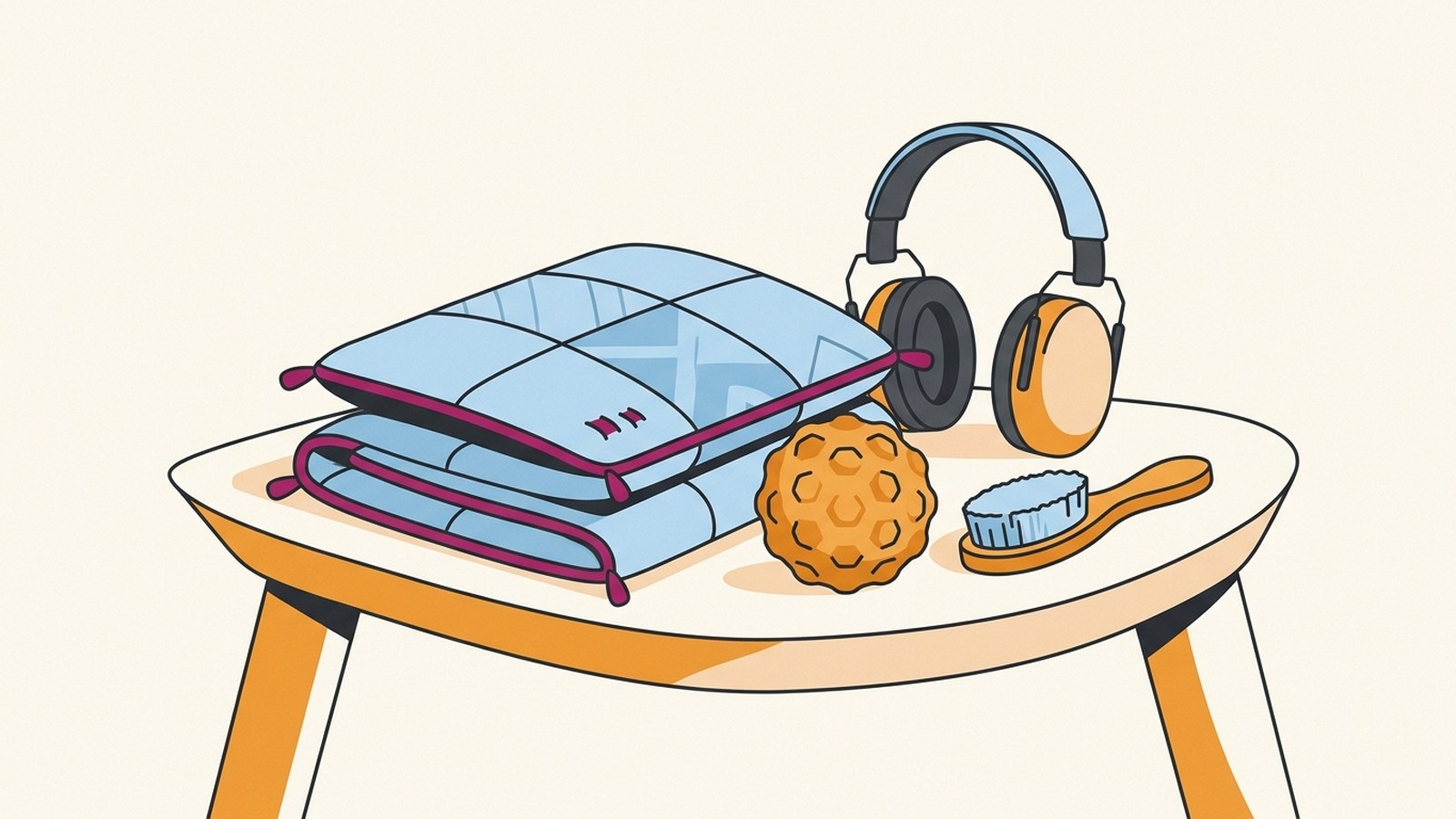
Occupational therapy for sensory processing disorder is one of the most common reasons families contact a pediatric occupational therapist. Some children experience sound, touch, movement, taste and texture very differently from their peers, and for some of them the difference is large enough to make ordinary days hard.
This article covers what those difficulties can look like, how an occupational therapist evaluates them, what therapy usually involves, and some good questions to ask about any plan. Our occupational therapy page covers the service more broadly.
What do sensory processing difficulties look like?
Every child has preferences. What brings a family to an occupational therapist is usually a pattern that gets in the way of daily life.
A child who cannot tolerate a haircut, who melts down in a busy store, who gags at the texture of half the foods on offer, or who crashes into furniture all day looking for input, is not making a choice. These patterns are familiar to anyone who works with young children, and they can be exhausting for the whole family.
Sensory differences often fall into two broad groups, and many children show both at different times of day:
- Avoiding. Covering ears at ordinary noise, refusing certain clothes, distress at messy hands, pulling away from light touch, avoiding playground equipment.
- Seeking. Constant movement, spinning, jumping, chewing on shirts or toys, pressing hard against people and furniture, seeming not to notice bumps and falls.
Some children also have trouble with body awareness, which can look like clumsiness, using too much or too little force, or difficulty with dressing and other self-care.
About the label
Sensory processing disorder is not listed as a standalone diagnosis in the main diagnostic manuals. The American Academy of Pediatrics addressed this in a policy statement on sensory integration therapies, encouraging pediatricians to be careful with the diagnosis and to talk with families about treatment options.
Sensory differences are, however, well recognized as features of other conditions, and they are part of the criteria clinicians use to identify autism. So a child can have significant sensory difficulties with or without a label that has the word sensory in it.
For families, the practical point is simple. The label matters less than the difficulty. An occupational therapist can evaluate how your child responds to sensory input and how it affects their day, whatever the diagnosis on paper says.
What the research says about occupational therapy for sensory processing disorder
Two different things often share the same name, so the terms are worth knowing.
Ayres Sensory Integration is a specific approach with a manual, defined standards, and a properly equipped clinic space. Sensory-based interventions is a broader term that covers tools such as weighted items, brushing, and sensory diets, meaning a planned set of sensory activities through the day.
A systematic review published in Autism Research in 2019 looked specifically at Ayres Sensory Integration. It found support for the approach in autistic children roughly between the ages of four and twelve, with benefits in individualized goals, in how much help a child needed with self-care, and in taking part in daily activities.
Research on the broader set of sensory tools is more mixed and varies from one approach to another. Many children find particular kinds of input calming, and therapists often use these tools as one part of a wider plan. A good plan explains what each part is for and how progress will be checked.
What a sensory evaluation involves
Very little of it looks like testing, and none of it is a quiz your child can fail.
A therapist will spend a good part of the appointment talking with you, because you know your child across a whole week. What happens at bath time, in the car, at the grocery store, at a birthday party, in the first twenty minutes after school. The pattern usually shows up in ordinary detail.
The therapist will also see how your child handles unfamiliar equipment, whether they seek out movement or avoid it, how they respond to noise, and how long it takes them to settle after something startling.
Standardized questionnaires are often part of it, usually filled in by you and sometimes by a teacher. They are useful for comparison with other children the same age. They are one piece of the picture, alongside the history and what the therapist sees.
The most useful thing you can bring is specifics. Not a child who hates noise, but a child who covered their ears and ran out of the school assembly on Tuesday and could not be persuaded back in. Examples with a time and a place attached are worth more than any description. Some families also bring short phone videos of the hardest moments, since children often behave differently in a new setting than they do at home.
What occupational therapy usually focuses on
Plans vary from child to child, but most include some version of these steps.
Understanding the pattern. Sensory seeking and sensory avoiding can look opposite and often occur in the same child. An evaluation helps separate a sensory pattern from an attention difficulty, a motor difficulty, anxiety, or a skill a child has not developed yet.
Focusing on what gets in the way. The goal is not to change who a child is. A child who dislikes clothing tags and cuts them out has solved their own problem. A child who cannot get dressed for school most mornings has a goal worth working on.
Adjusting the environment. A lot of useful occupational therapy work is about the setting as well as the child. Seating, lighting, warnings before transitions, where a child sits in a classroom, and the order of the morning routine can all make a real difference, often quickly.
Building skills. Through play-based activities, a therapist helps a child build tolerance, body awareness, regulation and self-care skills, and tracks progress toward the goals agreed with the family. Sessions are built around play because children engage more, and practice more, when an activity is fun.
Supporting your child at home
While you wait for an evaluation, or alongside therapy, a few simple steps often help.
- Give warning before changes. A two minute heads up before leaving the park or turning off a show makes transitions easier for many children.
- Plan for hard places. Headphones for a loud event, a quieter time for the grocery store, or a familiar snack in the bag can make an outing manageable.
- Build in movement. Children who seek input often settle better after active play such as climbing, jumping or carrying something heavy.
- Keep a short log. Note what happened, when, and what came before it. A week of notes is very useful at an evaluation.
None of these replace therapy, and none of them need special equipment. They simply make the day a little more predictable while you work out what your child needs.
Good questions to ask about any plan
If a plan is being proposed for your child, these questions are fair, and a good clinician will be glad to answer them.
- What specifically are we trying to change, in terms I would notice at home?
- How will we know if it is working, and by when?
- What is each part of the plan meant to help with?
- What happens if it does not seem to be working?
- What can we change at home or in the classroom to help?
When to reach out
It may be worth asking about an evaluation if sensory responses are getting in the way of eating, sleeping, dressing, bathing, going out in public, or taking part at school or daycare, or if they seem to be getting harder rather than easier as your child grows.
It is also worth asking if you find yourself planning the whole family’s day around avoiding certain sounds, clothes, foods or places. That kind of quiet adjustment is common, and it is often the clearest sign of how much a child’s sensory responses are shaping everyday life.
The short version
Sensory differences are real, they can make daily life hard for a child and their family, and occupational therapy has a lot to offer. The most useful therapy starts with understanding your child’s specific pattern and focuses on the parts of the day that matter most to your family.
If you are trying to work out whether any of this applies to your child, tell us what you are seeing and we will let you know whether an evaluation makes sense.
Common questions
Is sensory processing disorder an official diagnosis?
It is not listed as a standalone diagnosis in the main diagnostic manuals, and the American Academy of Pediatrics has encouraged caution around using it as one. Sensory differences are recognized as part of other conditions, including autism. Either way, the difficulties a child has are real, and an occupational therapist can evaluate them whatever label is or is not attached.
Do weighted vests and brushing help?
They are tools some therapists use as one part of a wider plan, and research support varies from one approach to another. If one is recommended for your child, it is reasonable to ask what it is meant to help with, how you will know whether it is working, and when the plan will be reviewed.
What is Ayres Sensory Integration?
A specific, structured approach to sensory work, delivered in a properly equipped space with defined standards the therapist follows. It is the most studied approach in this area. The term sensory therapy is broader and covers a wider range of practices.
My child's preschool says they have sensory needs. Is that a diagnosis?
No, and it is usually not meant as one. It is a description of what staff are seeing, which is useful information. What it does not tell you is why, and the why is what determines whether therapy would help. That is what an evaluation is for.
About this article. Written and reviewed by the clinical team at Joy Therapy and Learning Center, a pediatric therapy practice in Cumming, Georgia.
This article is general information and is not a diagnosis or medical advice about your child. If something here sounds familiar, speak to your pediatrician or ask us for an evaluation.